
Anchor Scripture: Deuteronomy 4:20
“But the Lord hath taken you, and brought you forth out of the iron furnace, even out of Egypt, to be unto him a people.”
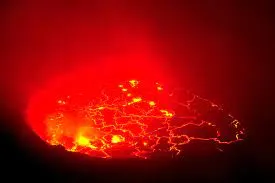
Throughout Scripture, hell and death are sometimes described in terms of torment, sickness, or pain, as in our anchor passage. This does not rule out some form of literal fire in judgment, but such imagery should be applied only where the text supports it. In this interpretation, the lake of fire, or second death, is one phase in the progression of punishments for disobedience outlined in Leviticus 26:14–33.
This phase represents a sevenfold intensification of suffering (Matt. 12:43–45) for those who remain unrepentant after repeated warnings from God. Adam’s disobedience began mankind’s transgression; consequently, humanity now experiences the first phase of sin’s torment, though believers may find relief through the power of Christ’s blood. This helps explain the second death. In the context of Adam’s transgression, death is understood as sinfulness—the soul’s separation from a holy God (Isa. 57:17; 59:2; Matt. 8:22). Hence the warning, “in the day that thou eatest thereof, thou shalt surely die” (Gen. 2:17).
Revelation 20:14 could simply be read as describing a final death. Yet, in this interpretation, it must also be understood alongside the pattern in Leviticus 26 and should not imply the end of reconciliation. Judgment therefore unfolds progressively. Just as God has power to restore life in the first resurrection, He also has power to restore those subjected to the second—or even a later—phase of death for judgment. God is eternal and Almighty.
Nothing simply vanishes; rather, things change from one form to another as God permits. Human beings pass from physical life to a spiritual state at death; water becomes ice or steam; seeds grow into fruit-bearing trees; hydropower becomes electrical energy; and the Word became flesh. This recalls the scientific principle commonly called the conservation of matter: matter is not created or destroyed in ordinary physical change but is transformed from one form to another.
Accordingly, I understand Leviticus 26 to depict a process that continues until God has reconciled all things to Himself. As noted earlier, Christ’s payment for sin at the cross is understood as part of God’s eternal purpose (Eph. 3:11; Rev. 13:8; Eph. 1:9–10). On this basis, Abraham and others could receive God’s righteousness through faith even before Christ was manifested in the flesh. Explore the conversation further.
Have questions or comments
Please use the form to the side