
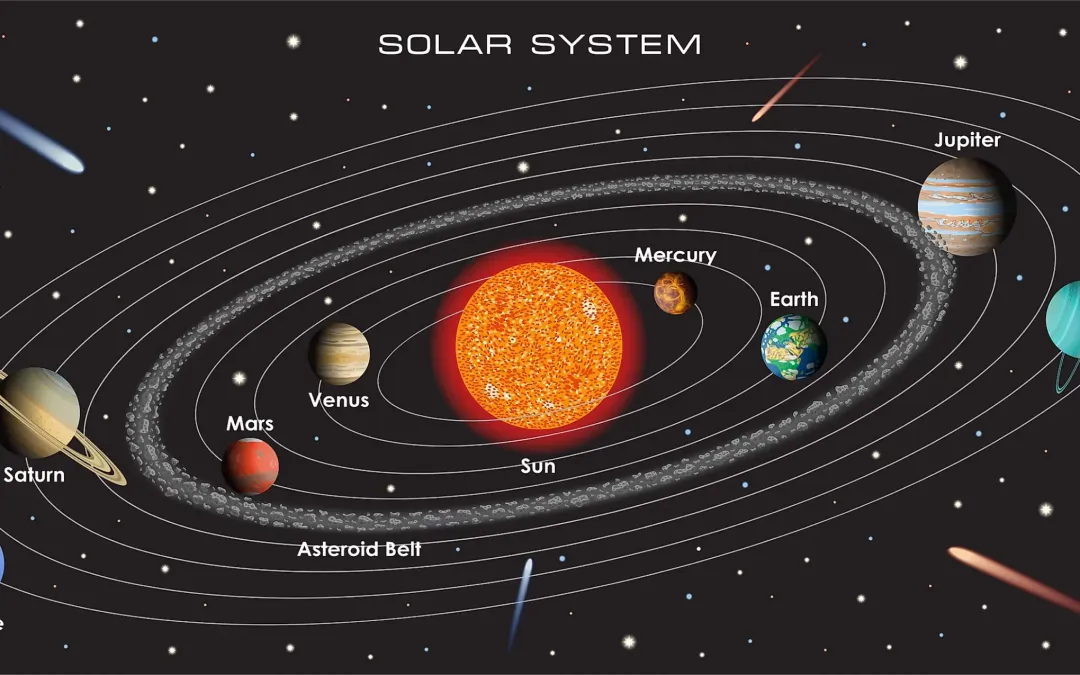
A response to the listing “Planet-X: Introduction” prompted me to reconsider the subject. The responder argued that, based on scientific evidence, there ought to be more than twelve planets. With that thought in mind, I revisited my diagram and reviewed the documentary on the Solar System, which discussed the distinction between the inner and outer planets. I then realized that representing the families of the children of Levi with bubbles, as I had done with the tribes, would create a similar distinction between an inner and an outer group. This structural parallel becomes even more striking when one considers that the inner planets are rocky. In Scripture, Christ is described as the Rock and the power of God (1 Cor. 1:24); thus, in this comparison, Christ as the Head and the Church as His body correspond to the rocky inner group. This imagery of Christ as both Rock and divine light is reinforced in Revelation, which says that in the new world there will be no need for the sun or moon, because God will be its light (Rev. 21:23), while Jesus declared, “I am the light of the world.”
From this broad correspondence, the physical structure of the Solar System brings additional parallels into focus. Most asteroids lie between the inner and outer planets, forming a kind of boundary with considerable space on either side. Compare this with Numbers 2:2 and Luke 16:19–26. Immediately beyond this dividing region lies Jupiter, the largest planet, corresponding in my diagram to Judah, the tribe with the largest population. This correspondence extends to the order of procession, since the camp of Judah was also instructed to set out first (Num. 2:9).
The same pattern becomes more specific when attention turns to the four inner planets—Mercury, Venus, Earth, and Mars. In my diagram, these correspond to four Levitical family groups arranged around the Ark of the Covenant: Kohath, Gershon, Merari, and Moses/Aaron and sons. I understand this ordering as illustrating Romans 1:20 and as reflecting “the kingdoms of our Lord, and of His Christ” (Rev. 11:15), when all things are subdued under His feet (1 Cor. 15:25). Extending the comparison outward, the twelve outer planets represent the nations—Sodom and her sisters—whose captivity, according to Ezekiel 16:53, 55, is restored along with Israel’s, though not through the new covenant of the Church of Jesus Christ (Eze. 16:61; Jer. 31:31). The inner-and-outer arrangement therefore points, in my interpretation, toward the reconciliation of all things described in Colossians 1:20. How this reconciliation would unfold is considered under the subtitle, The Lake of Fire: Second, or the Final Death?
Seen in this larger framework, the contrast between the two planetary groups takes on a spiritual significance. The rocky inner planets are compared with the saints of God, consecrated through Christ and therefore able to abide His holiness, much as the Levitical priesthood was consecrated. The outer planets, by contrast, are associated in this analogy with the twelve tribes and the unconsecrated nations.
This distinction, in turn, finds a further parallel in the arrangement of the Jerusalem temple and the tabernacle Moses built in the wilderness. Only members of the Levitical priesthood—which, in this interpretation, the Church replaces (Rev. 1:6)—could enter the inner sanctuary (compare Rev. 21:27). The outer court was accessible to the other tribes and, symbolically, to the nations. Revelation 11:1–2 likewise distinguishes the temple from “the court which is without the temple,” which is given to the Gentiles.
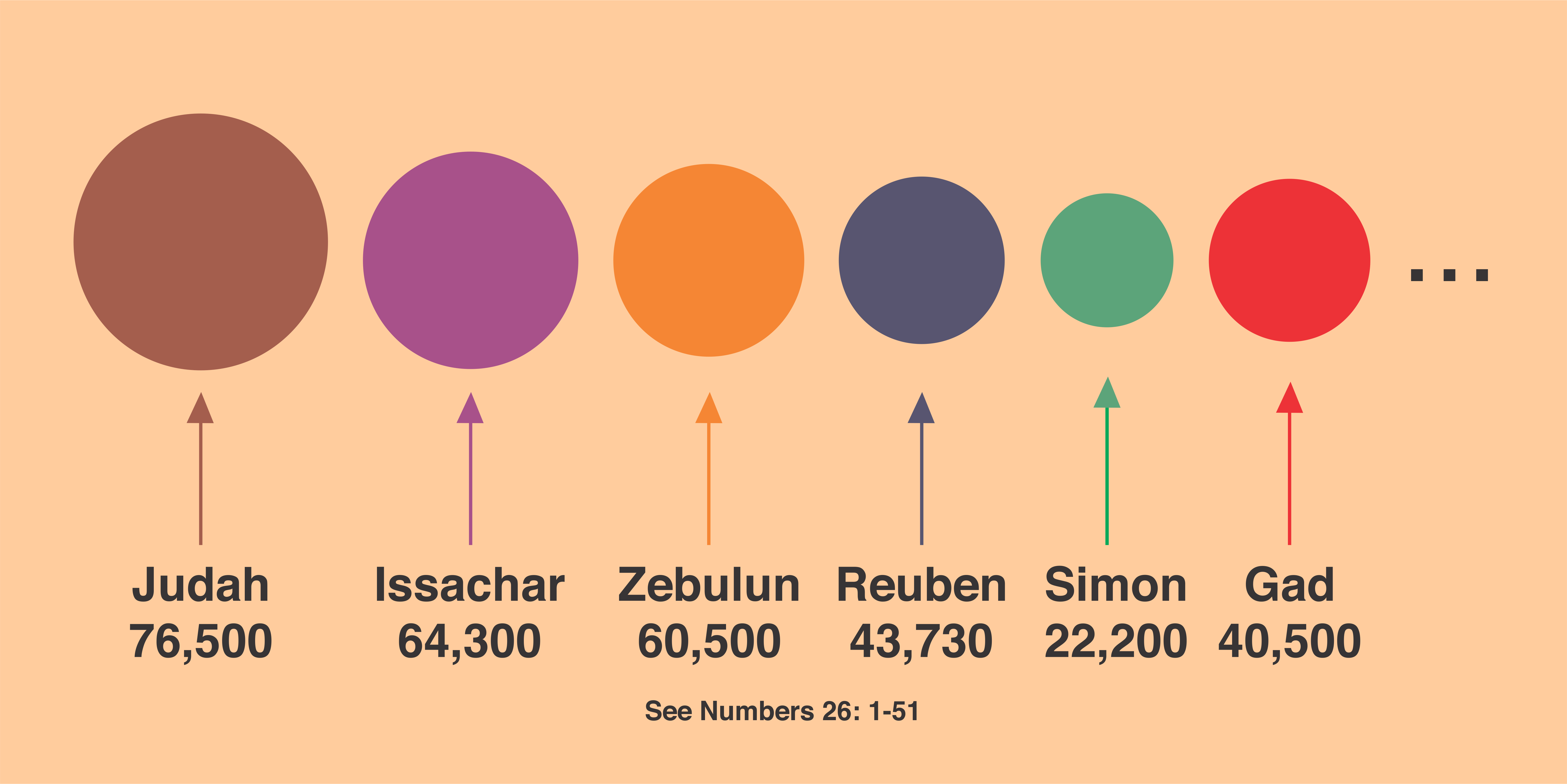
Beyond their position and composition, the relative sizes of the planets suggest another point of comparison. The inner planets are considerably smaller than the outer planets, just as the Levitical family populations were much smaller than those of the tribes in Moses’ census before Israel entered the Promised Land. Kohath numbered 8,300, Gershon 7,500, and Merari 6,200, compared with Judah at 76,500, Issachar at 64,300, and Zebulun at 60,500.
These several correspondences—position, separation, composition, and size—come together visually in the 12-planet diagram. The diagram illustrates the proposed inner-and-outer arrangement by counting the sun and moon (Luna), the nine planets recognized when the diagram was developed, and “Nibiru,” or Planet-X. Within this arrangement, the Asteroid Belt is especially significant because it visually separates the inner and outer groups.
Finally, the proposed correspondence becomes more detailed when the tribes are placed in their prescribed order of movement. If the bubbles representing the tribes are placed side by side in the order in which the tribes were instructed to break camp (Num. 10:5–6), beginning with Judah, their relative sizes appear to correspond with those assigned to the outer planets in the diagram. Simeon, with the smallest population, corresponds to Pluto, while Gad corresponds to Planet-X. The size assigned to Nibiru/Gad departs somewhat from this sequence because the size of Planet-X was uncertain when the diagram was created. Even with that qualification, the model brings the number of outer planets to twelve, beginning with Jupiter as Judah. In this way, the sequence returns to and reinforces the same inner-and-outer pattern proposed for the Solar System as a whole, with a similar correspondence suggested for the inner planets.. View the complete diagram.
Have questions or comments
Please use the form to the side