
Anchor Scripture: Luke 4:17-21; Leviticus 26
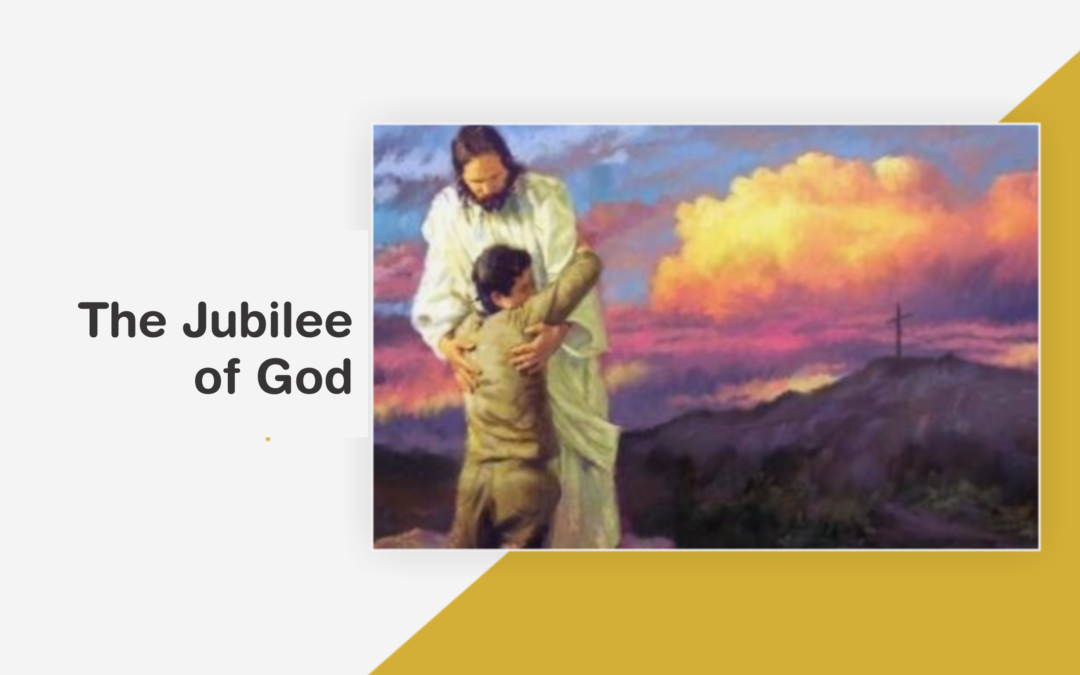
In Luke 4:17–21, Jesus reads Isaiah’s proclamation of release for captives, liberty for the oppressed, and “the acceptable year of the Lord,” then declares, “This day is this scripture fulfilled in your ears.” I understand this as Jesus identifying His earthly mission with the fulfillment of the Old Testament Jubilee. His preaching throughout Galilee, Capernaum, Jerusalem, and the surrounding regions therefore anticipated a greater Jubilee release.
Jubilee provided a remedy for debts that could not otherwise be repaid. After a prescribed period, those unable to recover lost property or escape servitude received release and restoration. Although “the borrower is servant to the lender” (Prov. 22:7), the earth ultimately belongs to the Lord (Ps. 24:1; Lev. 25:23), making human possessors stewards of His resources. Jubilee therefore joined justice with mercy by requiring release for those who could not redeem themselves. In this interpretation, God applies the same principle through Christ, freeing sinners from the bondage of sin.
The law also provided for a kinsman-redeemer who could recover property or relieve a relative’s debt. Likewise, the gospel offers sinners freedom through the grace of Christ’s cross. If property could not be redeemed, however, it remained with the creditor until Jubilee (Lev. 25:28). Hebrews 4:2 similarly stresses that the preached word must be received by faith to become effective.
As discussed in relation to Leviticus 26, I understand judgment as a phased treatment of persistent, unrepentant sin. Jubilee itself is recurring, following the cycle of seven sabbatical years described in Leviticus 25. I also understand Jesus’ teaching on forgiveness in Matthew 18:21–22—“seventy times seven”—as reinforcing this recurring pattern of mercy. Since 70 × 7 equals 49 × 10, I interpret the passage as suggesting ten Jubilee cycles in the progressive treatment of sin, expressed through the first death, the second death, and succeeding phases. Yet Scripture says that the last enemy to be destroyed is death itself (1 Cor. 15:26).
Accordingly, in this interpretation, it is death—not souls—that is ultimately abolished, so that every soul may finally be released from sin’s bondage through God’s Jubilee amnesty. The phased treatment therefore distinguishes placement and function without dividing the redemptive basis: the Church is the firstfruits and royal-priestly company released in the first Jubilee, while the nations form the larger harvest and move into phase 2 until its appointed Jubilee. Leviticus 26 supplies the restoration pattern in the manuscript’s interpretation, including the repeated forty-nine-year chronology; Revelation explicitly supplies the name second death; and Christ’s cross alone secures both the first and every later release, never the judgment or suffering itself.
Have questions or comments
Please use the form to the side